

- Partial keyword matching
- Exact keyword matching
- Negative keyword exclusions
Too Long? Check out this Video →
Why Keyword Tracking?
- Buying, hiring, and research intent is often shared openly in LinkedIn posts
- Keyword tracking helps you catch these conversations as soon as they happen
- You no longer need to manually search or scroll LinkedIn
- You can respond faster with better context and timing
How OutX.ai Helps with Keyword Tracking
OutX.ai continuously scans LinkedIn for keywords you define or describe in plain English. It groups matching posts into organized watchlists with labels for clarity. You see all relevant conversations in a single feed, updated automatically. From there, you can engage manually or automate engagement using simple rules.Quick Setup Guide
1. Create a Watchlist
Go to Keyword Tracking and click + New to create a new watchlist. A watchlist is where you tell OutX.ai what kind of LinkedIn posts you want to monitor.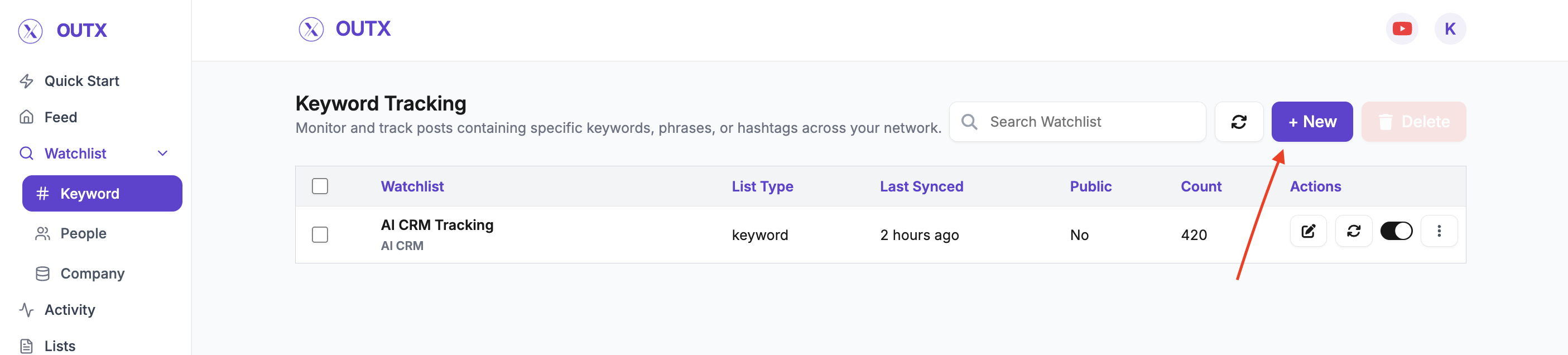
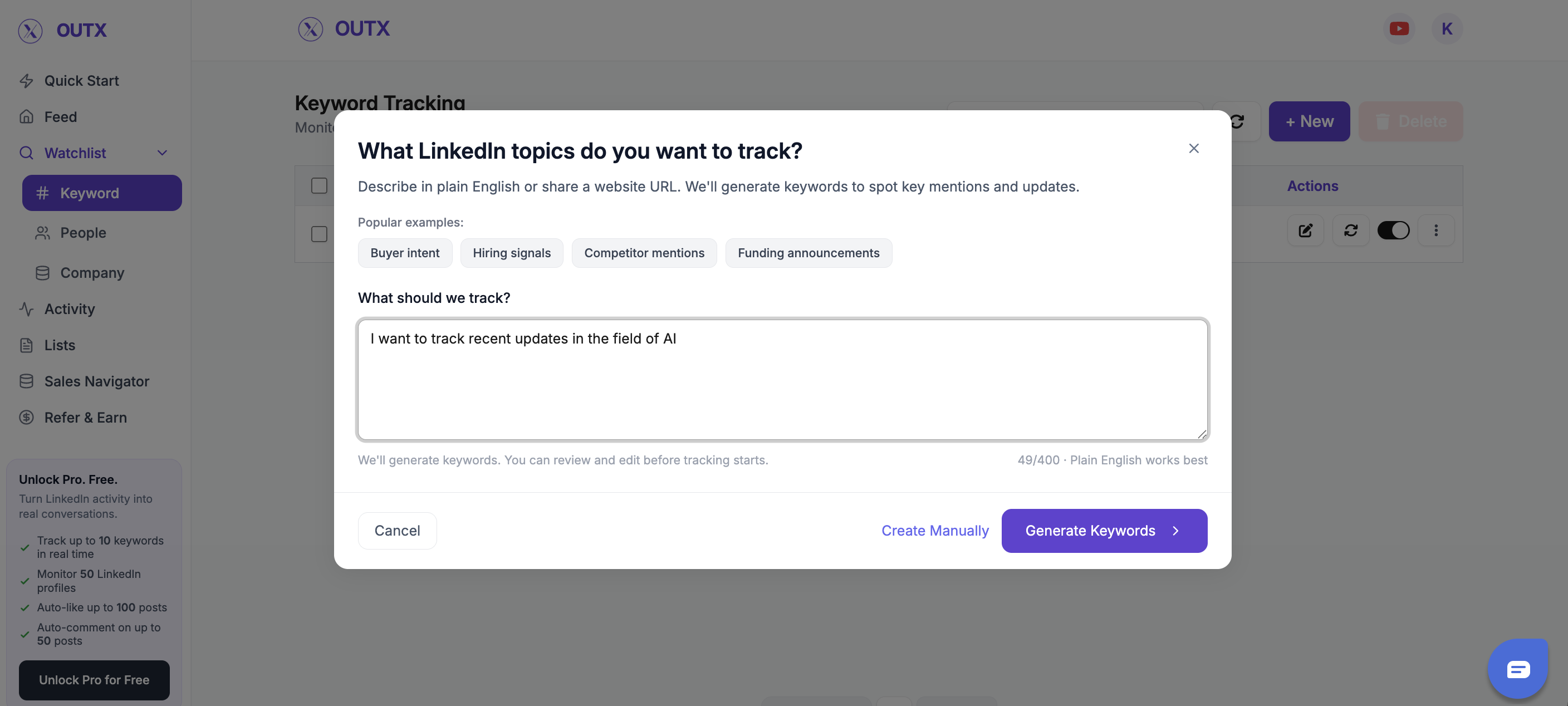
2. Add a Prompt (What should we track?)
Instead of manually setting up keywords right away, you can simply describe what you want to track in plain English. Think of this as telling OutX.ai what kind of conversations you care about. Example prompts (under 200 characters):- “People hiring remote engineers”
- “Founders talking about CRM tools”
- “Posts about outbound sales or lead generation”
3. Watchlist Details & Keywords
This section helps OutX.ai understand how to track posts accurately and how often to check LinkedIn.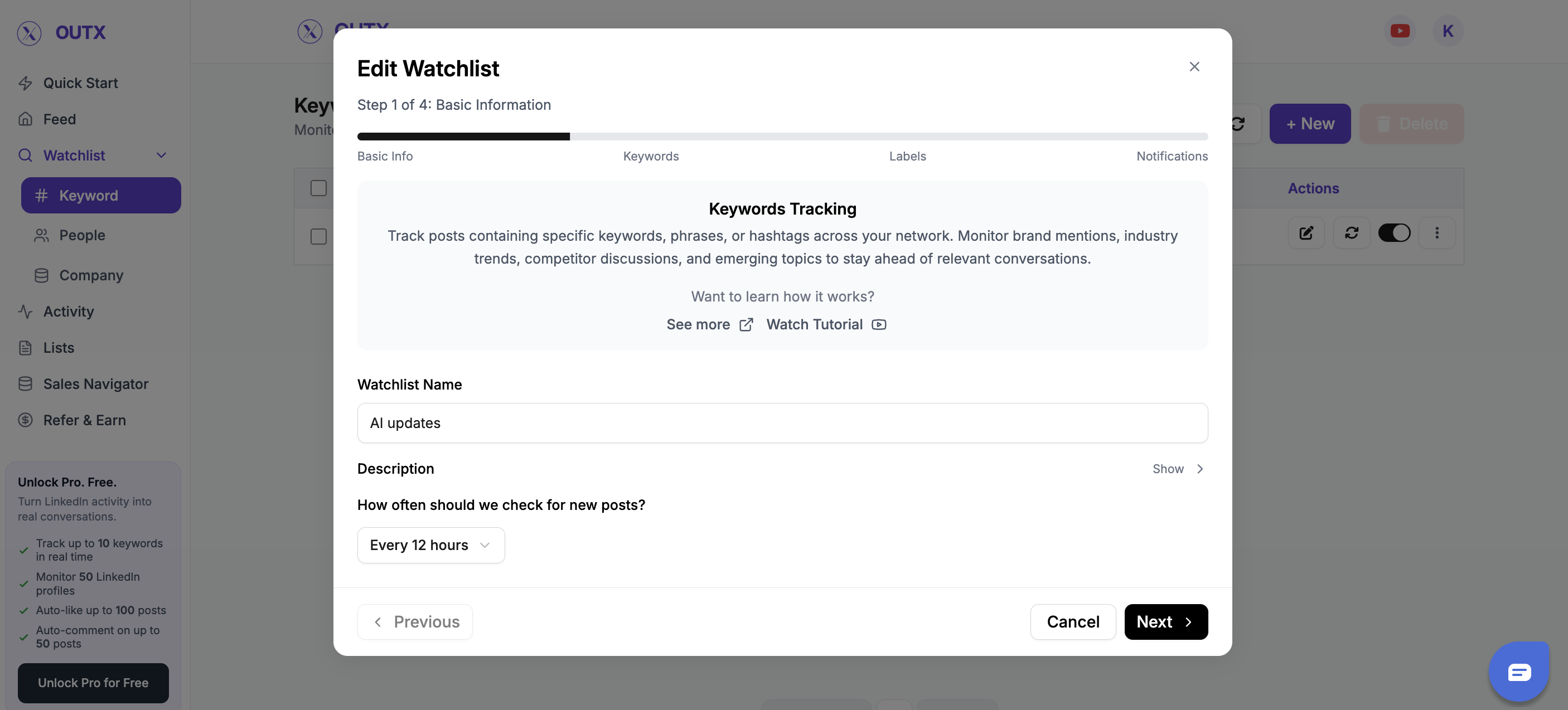
- AI Hiring Signals
- Outbound Tool Mentions
- Remote Jobs – Founders
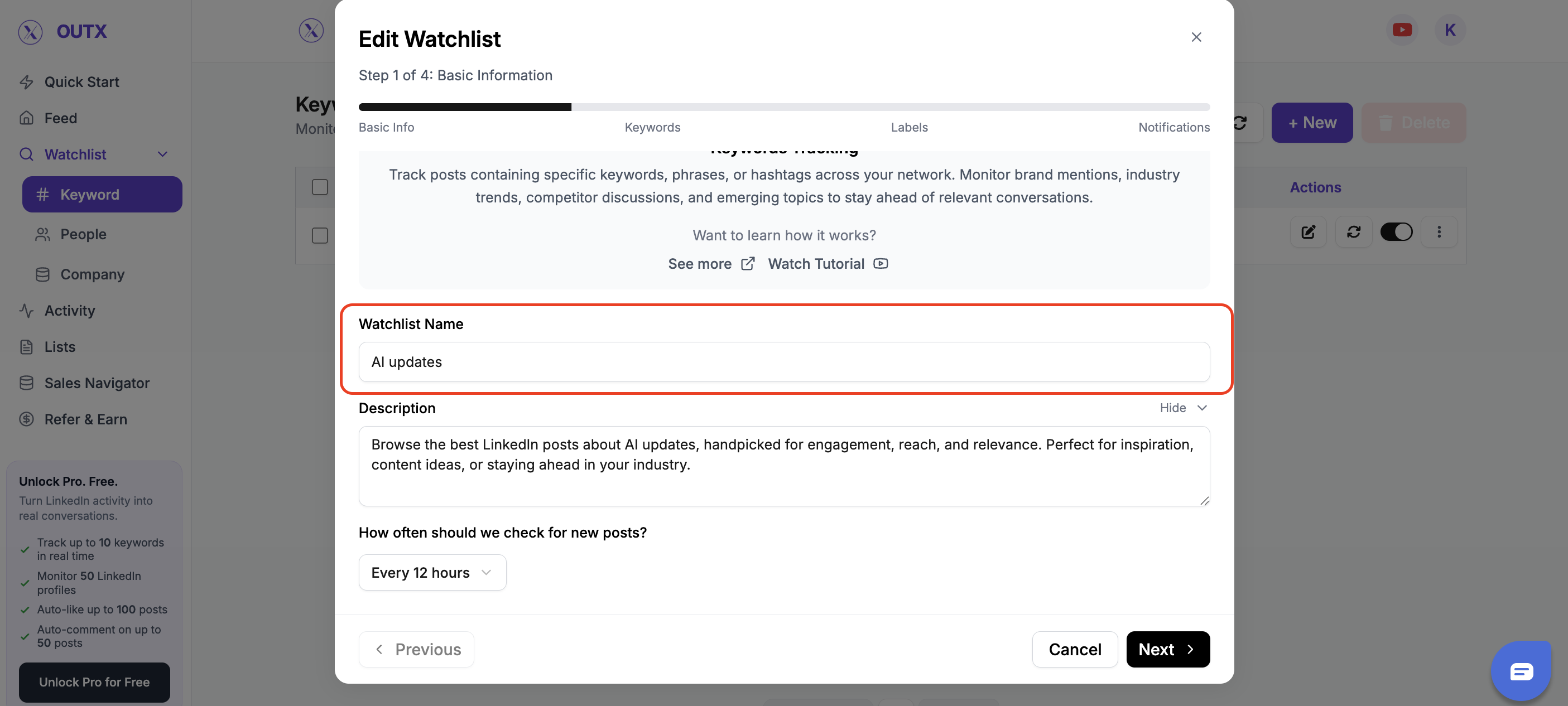
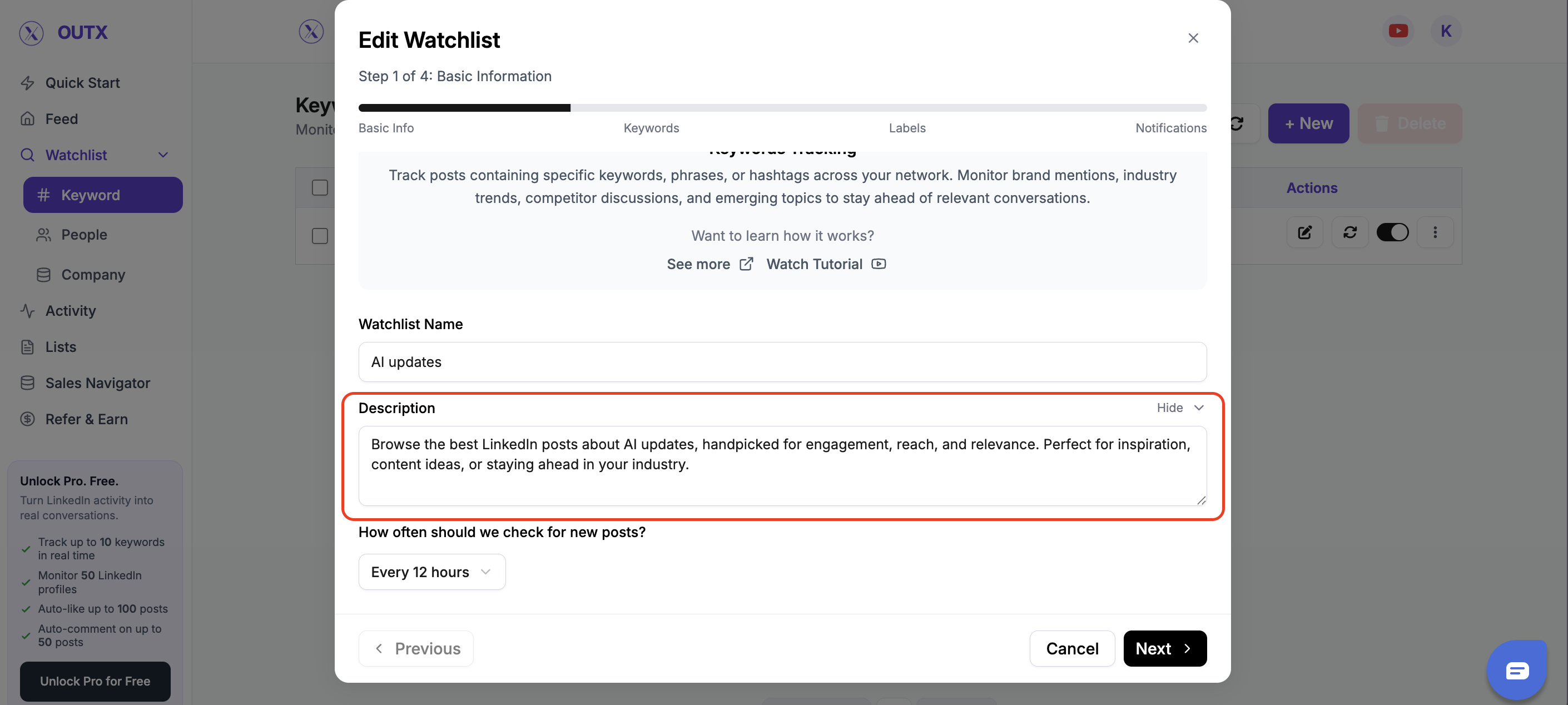
Watchlist Description Add a short explanation of what this watchlist is for. This helps your team (and future you) understand:
- Why this watchlist exists
- What kind of posts should appear here
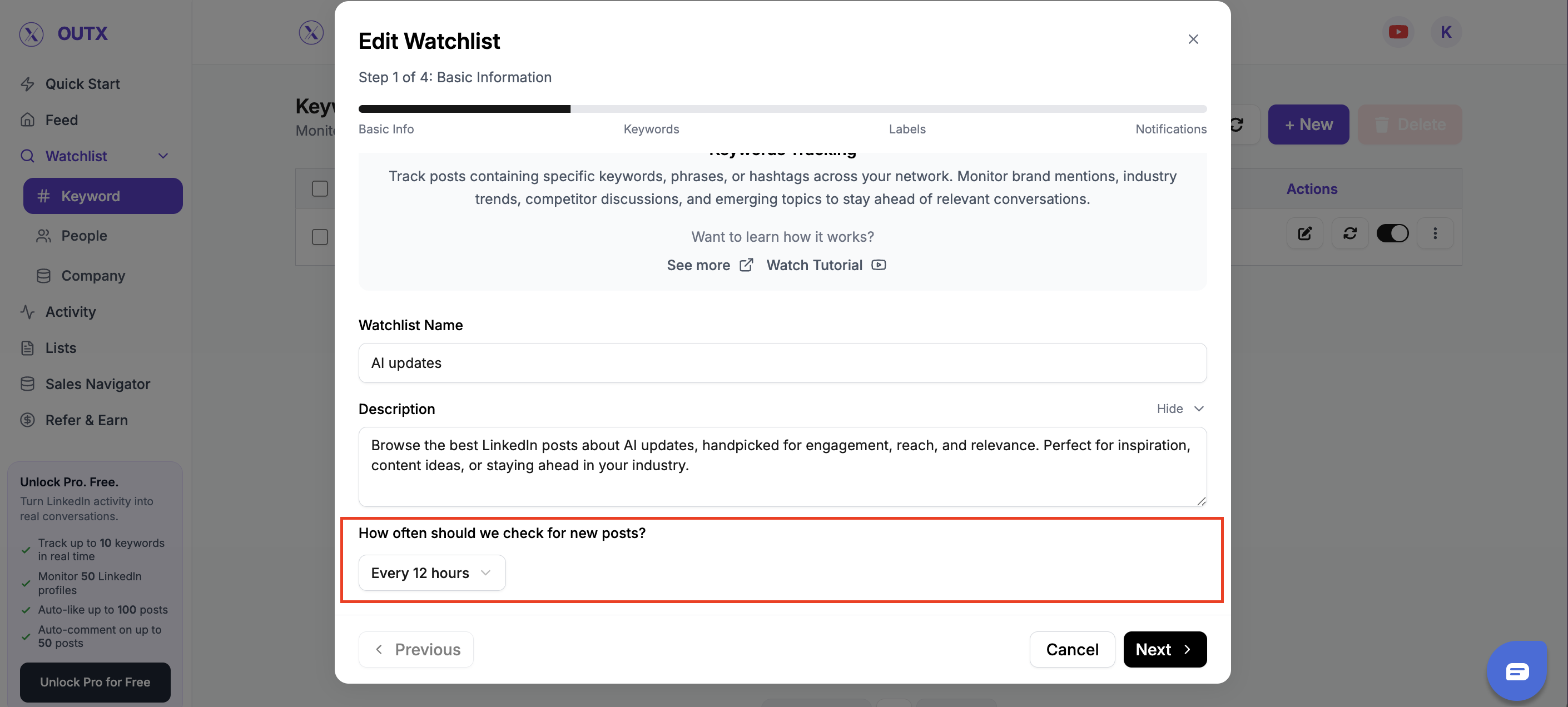
How often should we check for posts? This controls how frequently OutX.ai scans LinkedIn for new posts.
- More frequent checks = faster alerts
- Less frequent checks = fewer notifications
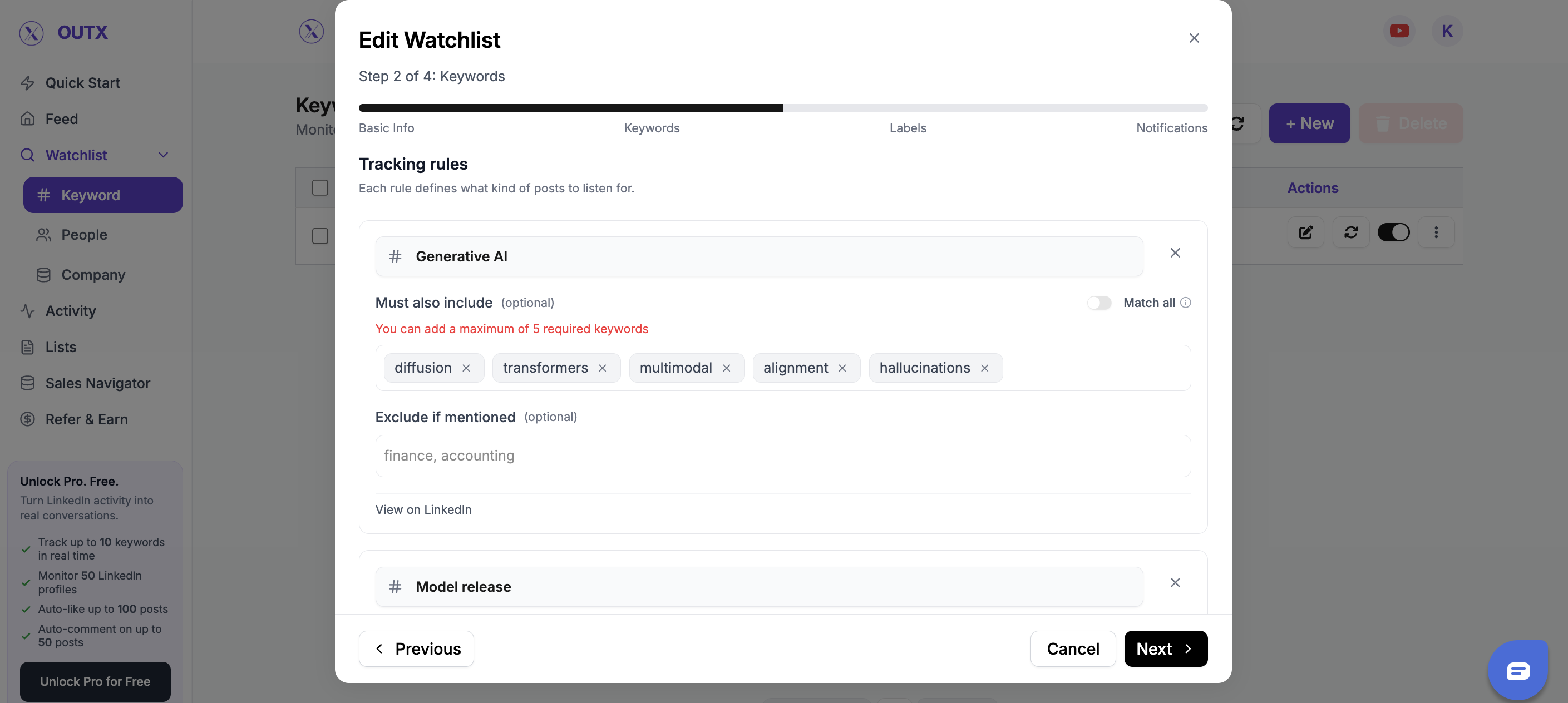
Primary Keywords
These are the main words or phrases OutX.ai looks for in LinkedIn posts. Use keywords that directly relate to your intent. Examples:- “hiring remote”
- “looking for developers”
- “CRM recommendation”
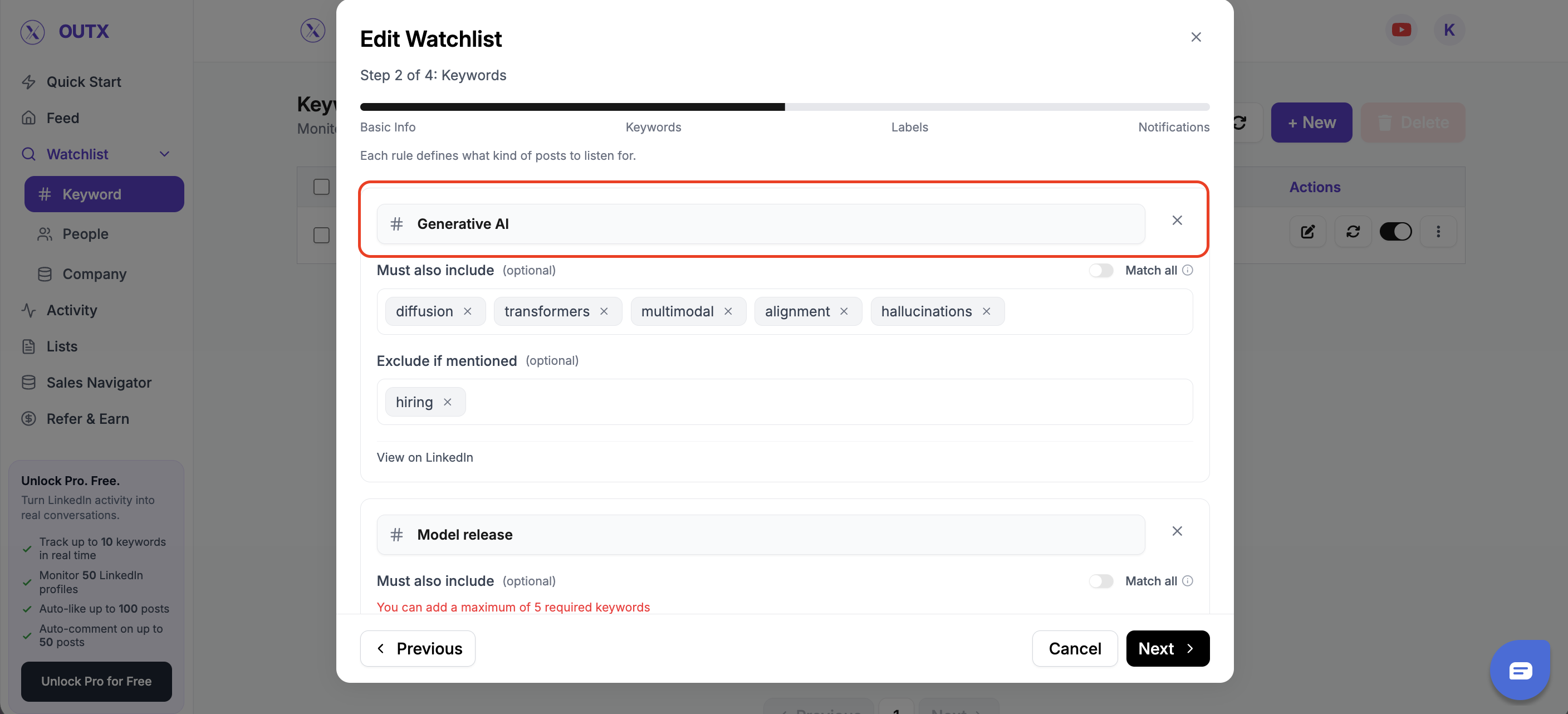
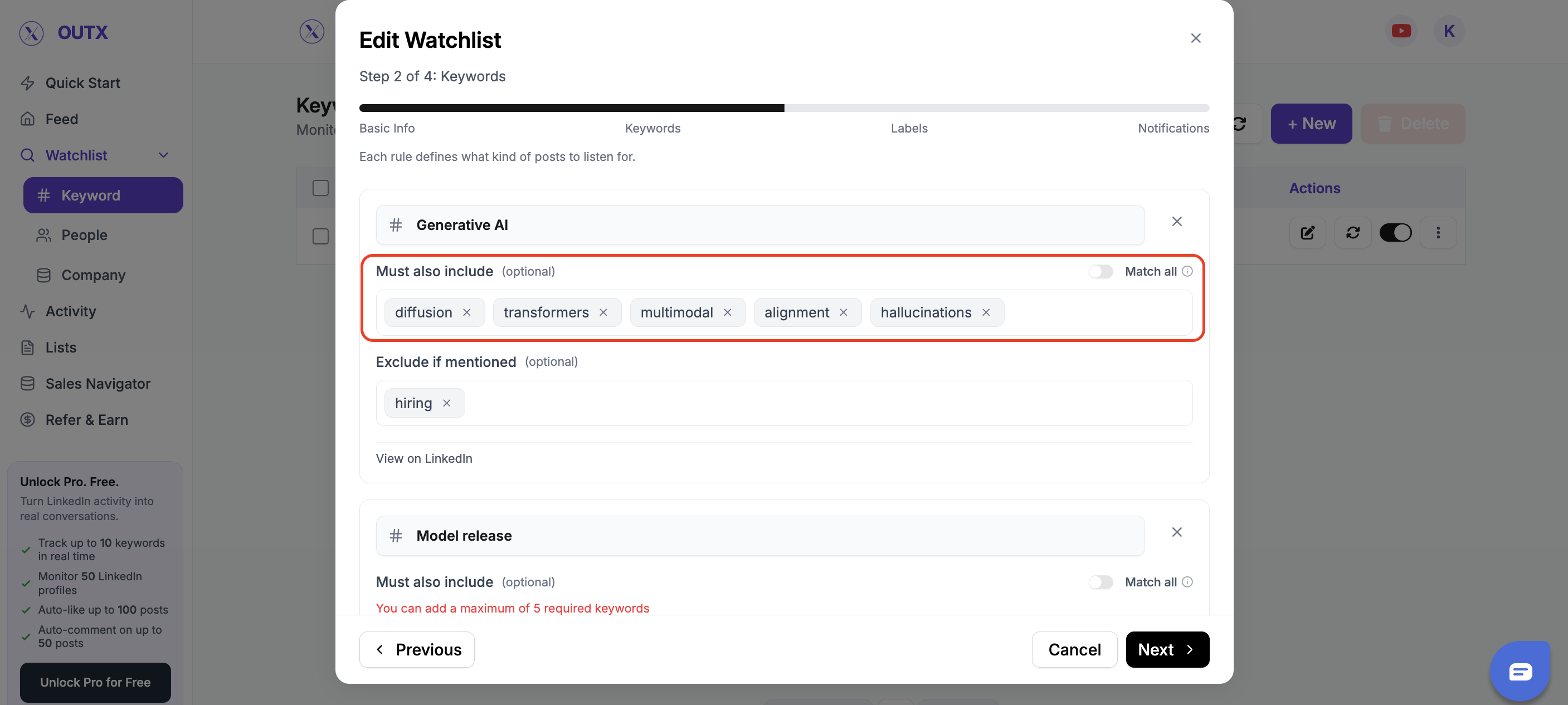
Must Also Include Keywords
Use this when a post should contain more than one condition to be relevant. Example: Track posts only if they mention:- “hiring” and
- “remote”
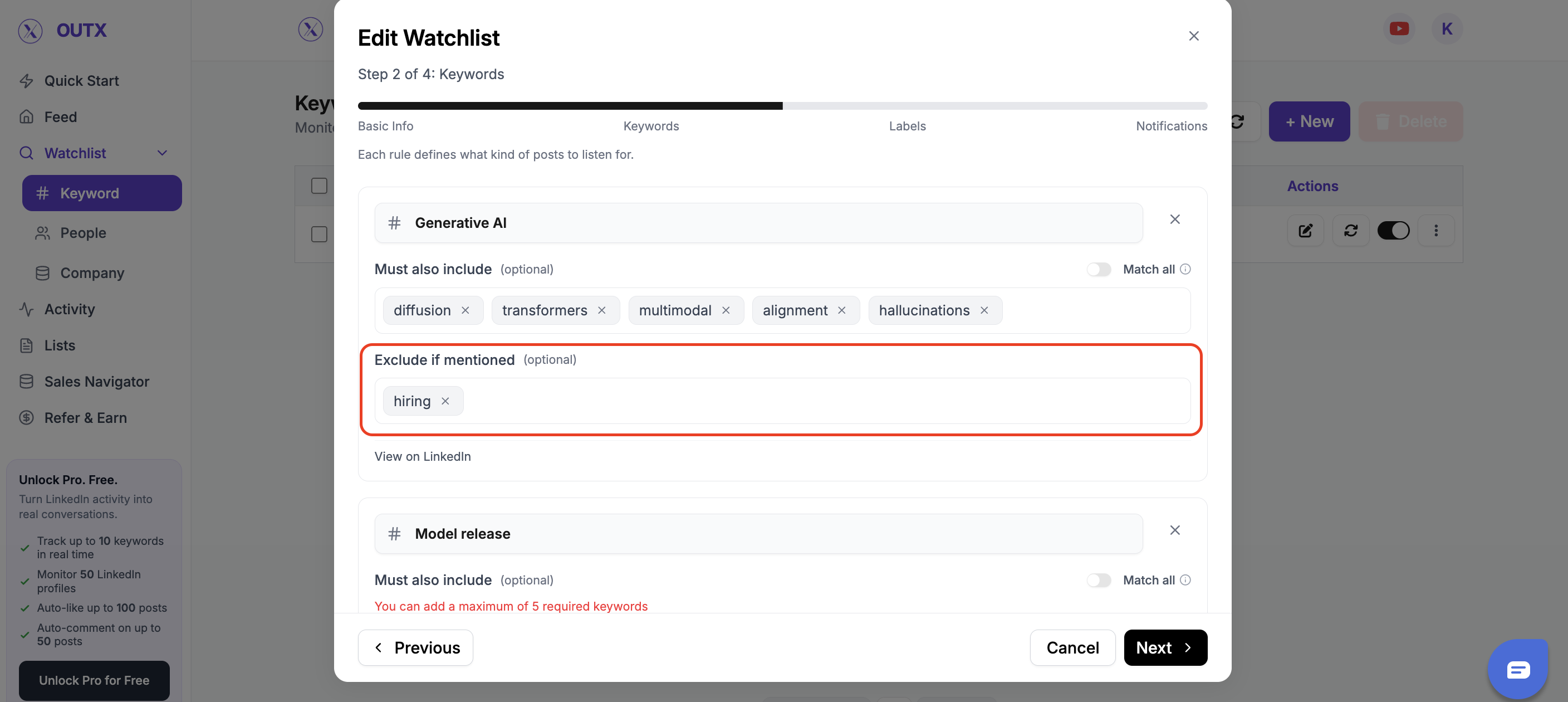
Excluded Keywords
These keywords tell OutX.ai what to ignore. If a post contains an excluded keyword, it will not appear—even if it matches your main keywords. Examples:- “internship”
- “freelance”
- “agency”
4. Labels
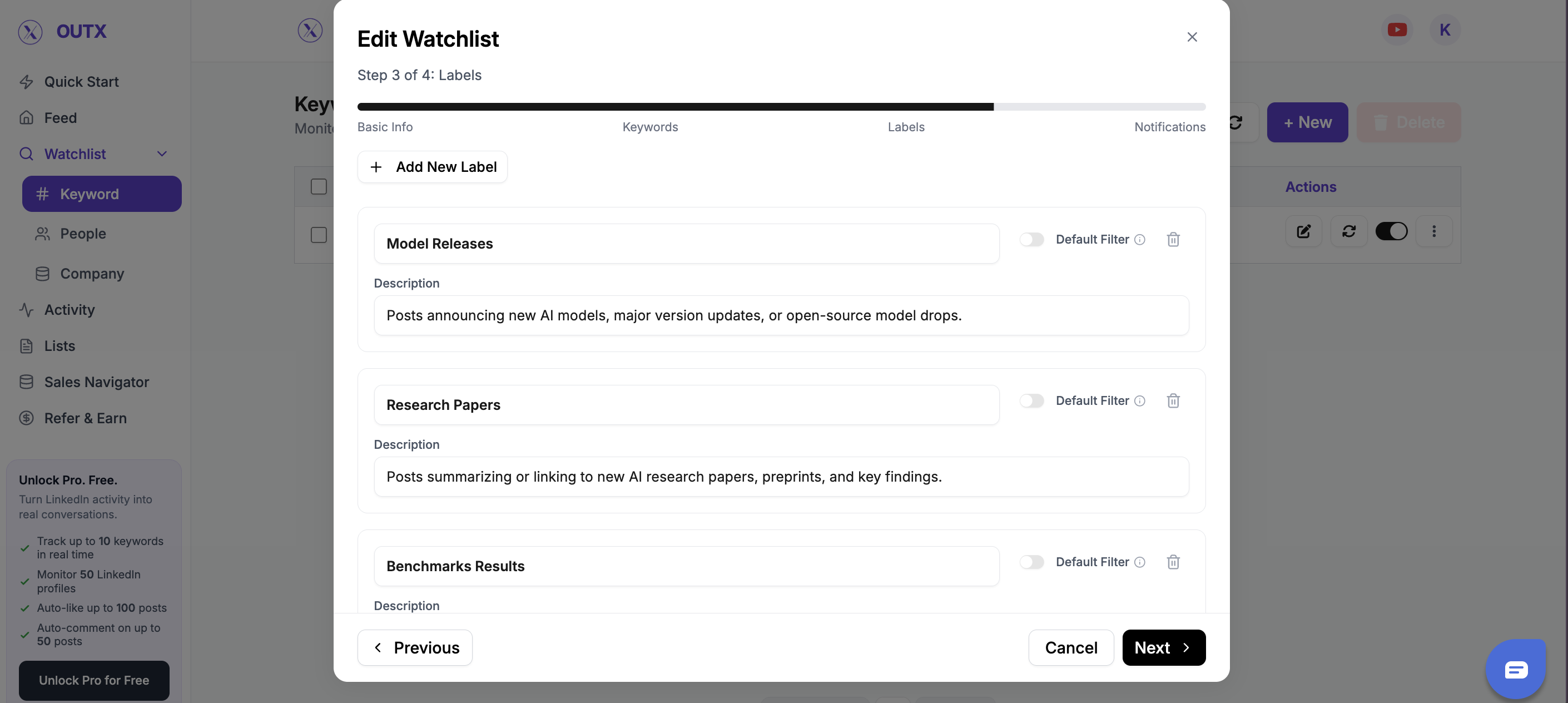
Labels help you categorize posts inside a watchlist. Instead of putting everything in one bucket, labels let you:- Group similar posts together
- Quickly understand why a post was captured
- Route signals to the right people or workflows
- Remote Hiring
- Tool Comparison
- Buying Intent
- Review posts faster
- Share context with teammates
5. Configuration
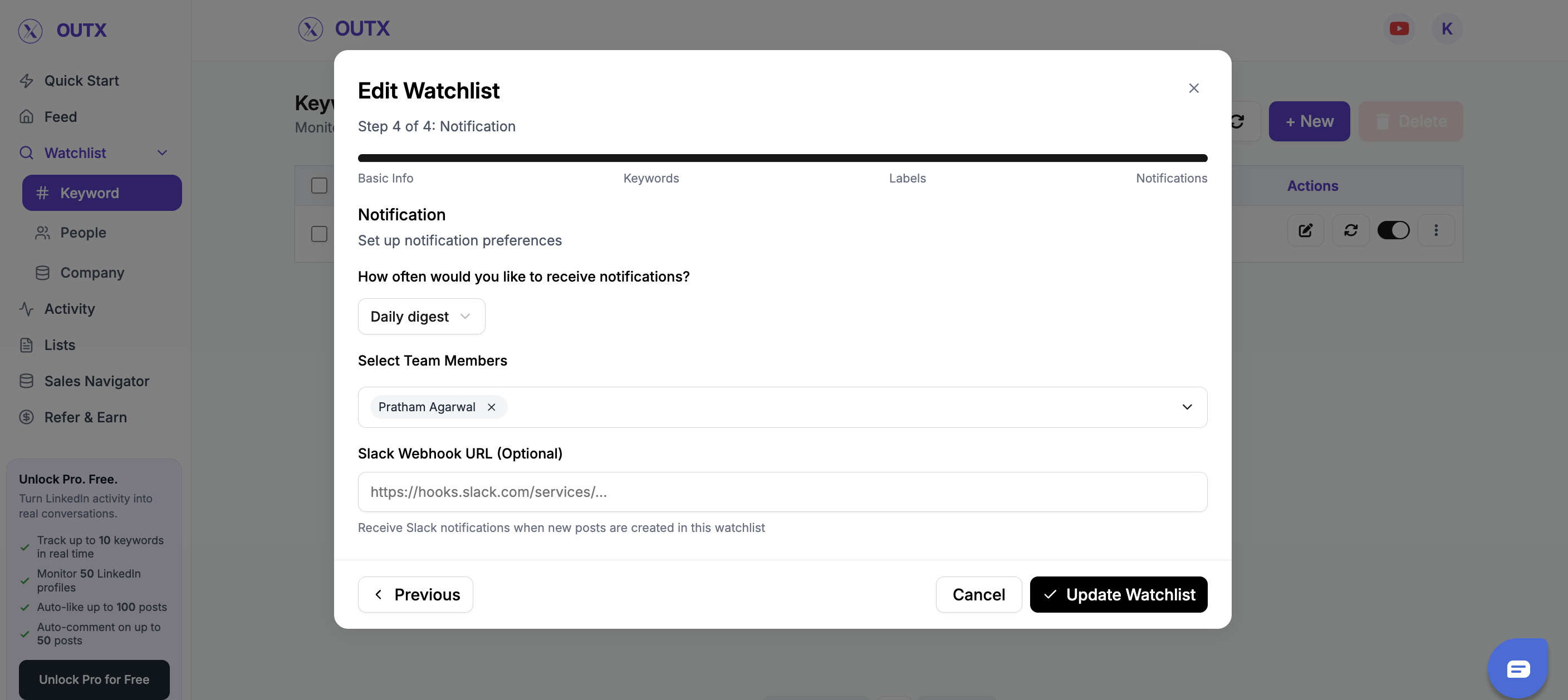
Fine-tune how and when you’re notified:- Fetch frequency: How often OutX.ai scans LinkedIn (e.g., every 12 hours)
- Team access: Add teammates to the watchlist
- Slack integration: Drop in your webhook URL to receive real-time alerts
6. Feed
Finally you have a live feed where you can posts with your targeted keywords.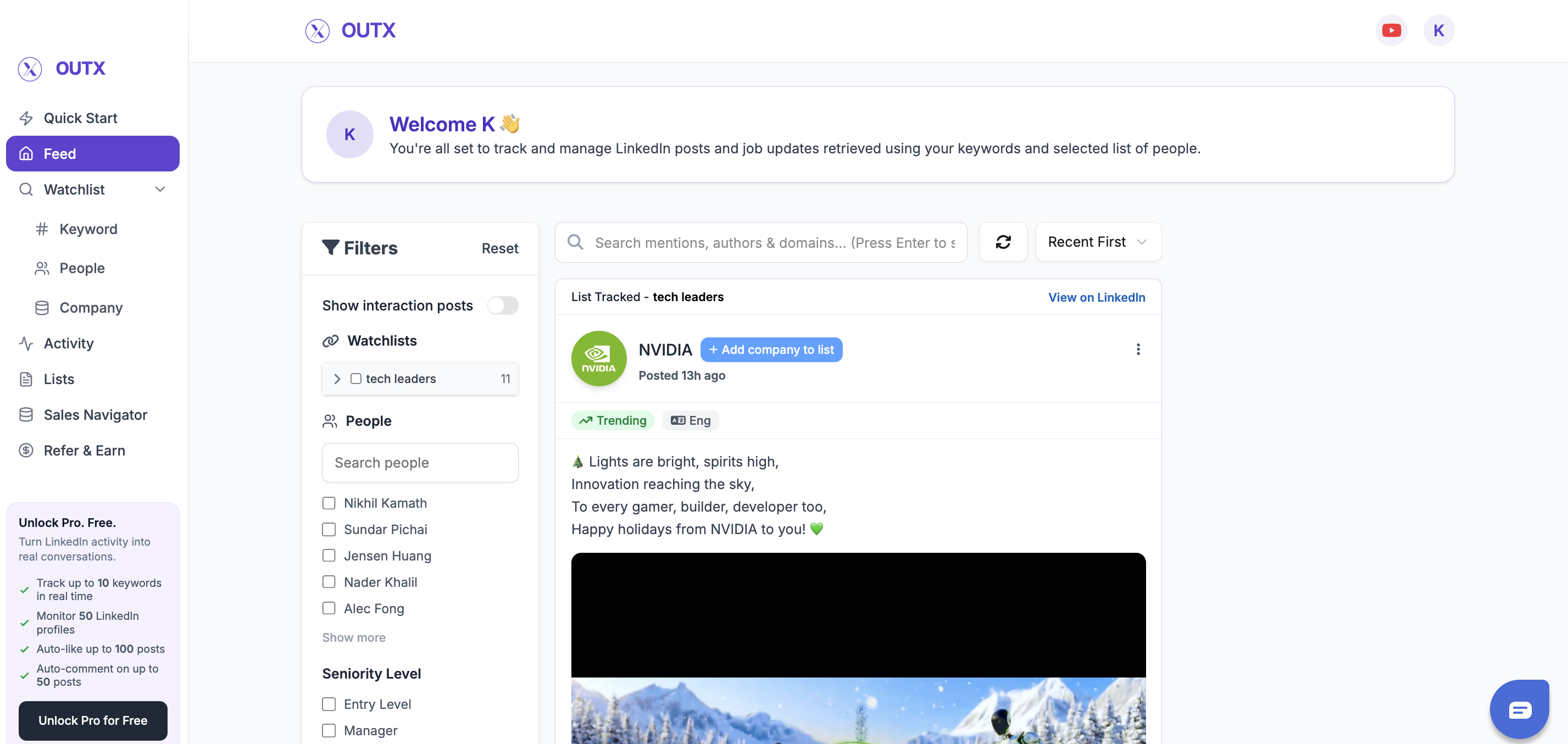
Frequently Asked Questions
1: Can I track hashtags on LinkedIn? Yes! OutXAI ’s keyword module supports hashtags as keywords.2: What happens if a keyword is misspelled? Outx.ai supports partial matching, so minor misspellings often still match.
3: Can I track entire keywords like “Social listening tools”? Yes you can track entire keywords you simply putting them in “must also include” category.
4: If want to do selective post tracking or I don’t want to track certain keywords what can I do? You can add those keywords that you don’t want to track in excluded keywords that way if the post contains certain keyword it won’t track.
5: Can I monitor LinkedIn comments? At present, Outx.ai focuses on post-level monitoring, but future updates may include comments as well.
6: How do I remove a keyword from a watchlist? You can edit the watchlist anytime and delete keywords or labels easily.
7: Is there a limit to how many keywords I can track? Your plan may have limits, but Outx.ai supports high-volume tracking for enterprise users.
8: Can i filter all the posts based on location? No, currently there’s no way for filtering posts based on location but we are working on it and soon you’ll see that